Our Approach
What "trauma-informed" means in a Pilates studio
"Trauma-informed" gets used a lot in wellness spaces. Here's what it actually means in how we teach class at Rooted in Strength Pilates.
"Trauma-informed" shows up everywhere in wellness marketing right now, and it can start to feel like a buzzword. At Rooted in Strength Pilates in Seaford, DE, it's not a tagline — it's a description of how class actually gets taught, from the words your instructor uses to how much choice you have in any given moment.
What the phrase means in practice
In practice, trauma-informed teaching means the class is built around safety, autonomy, accessibility, and connection — not around pushing everyone through the same sequence at the same pace. It shapes tone of voice, how instructions are given, and how much room you have to modify, slow down, or opt out of any movement without needing to explain why.
As both a certified Pilates instructor and Social Worker, I teach with clarity, compassion, and a deep understanding of how the body responds to stress and movement.
That combination — Pilates instruction alongside a social work background — is exactly why the studio is built this way. It means class is taught with an awareness that everybody walks in carrying something different, and that a room can be structured to feel steady and predictable regardless of what that is.
Choice and pacing
You're never locked into one version of an exercise. Every movement has room to be made smaller, slower, or skipped, and you're the one who decides which. If something doesn't feel accessible on a given day, you can take a lighter spring, shorten the range, or sit a movement out entirely and pick back up on the next one — no explanation required, no attention drawn to it. That's what autonomy looks like in a 50-minute class: not a script everyone follows the same way, but a room where you're trusted to know your own body.
Clear cueing
Clear cueing means instructions are specific and predictable rather than vague or rushed — you know what's coming next, what it's for, and what it should feel like. That predictability matters: when you know what to expect from a class, you can settle into it instead of bracing for the unexpected. Over time, that structure is what lets a new class start to feel familiar, even on your first few visits.
What this looks like from class to class
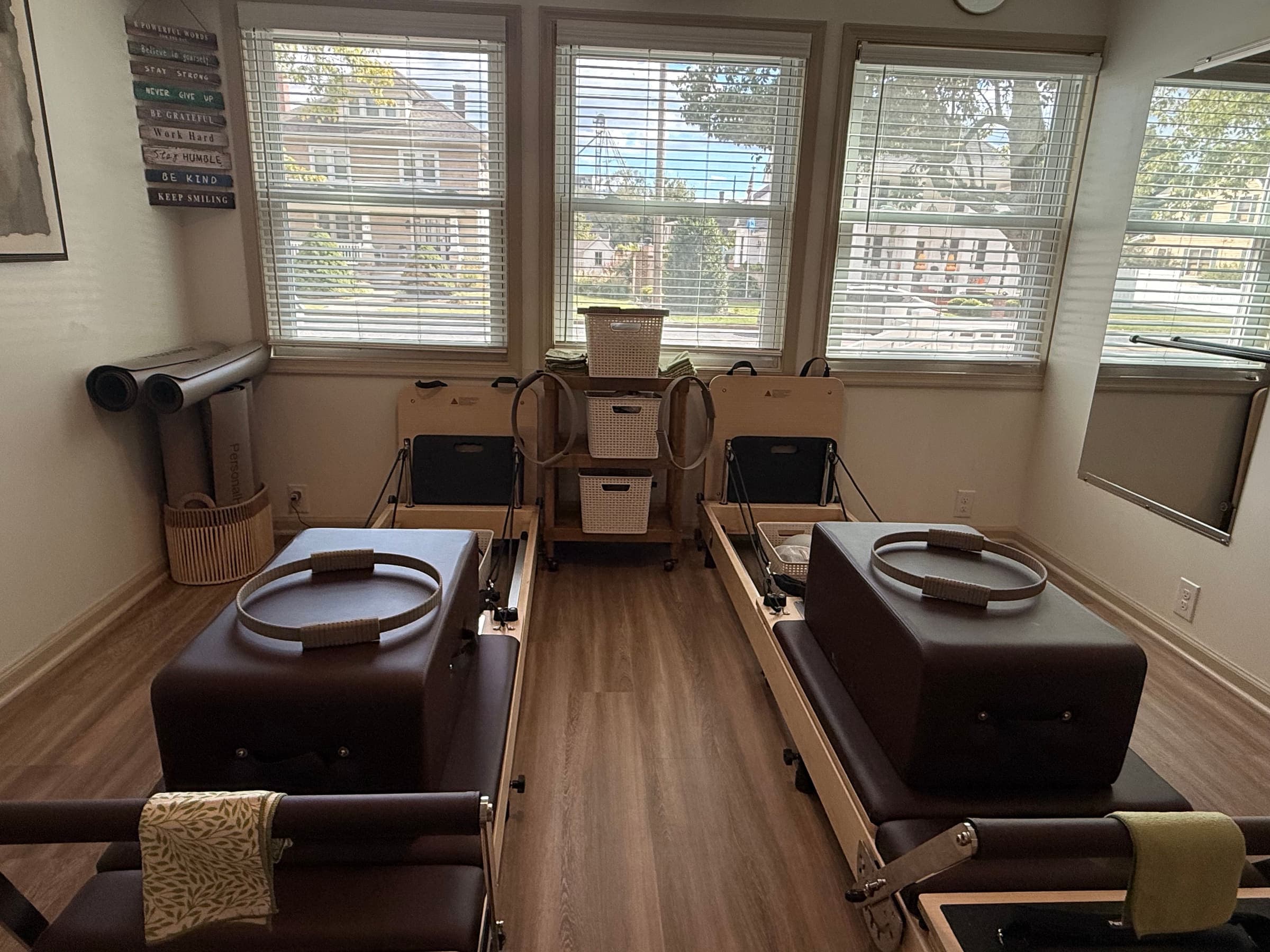
None of this is a one-time introduction that fades after your first visit — it's the same structure every class, every format, every week. The pacing, the choice, and the cueing stay consistent whether you're on the mat, on the Reformer, or in a private session, so the room feels the same to come back to no matter which class you choose.
What this isn't
Trauma-informed teaching is a description of how a class is run — the pacing, the language, the amount of choice you're given — not a form of therapy or medical treatment. It doesn't diagnose, treat, or manage any medical or psychological condition, and it isn't a substitute for working with a licensed therapist or physician. What it does do is create a movement space that's easier to walk into and stay in, regardless of what you're carrying that day.
- Safety — you always know what movement is coming next
- Autonomy — every movement can be modified or skipped, no explanation needed
- Accessibility — pacing and cueing meet you where you are
- Connection — movement taught with clarity and compassion
What NeuroPilates adds
This approach is most deliberate in NeuroPilates, our class built specifically around nervous-system awareness:
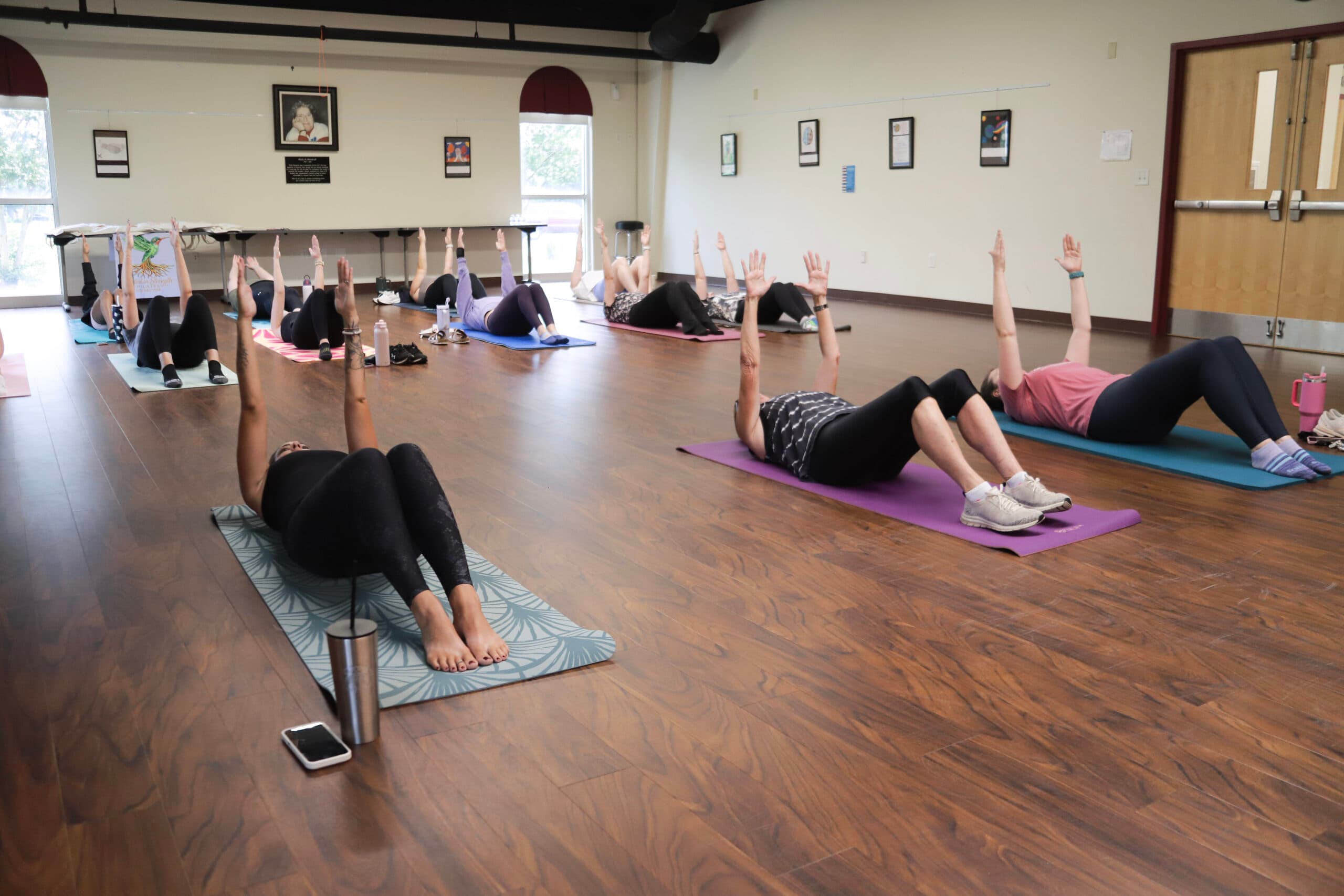
NeuroPilates is a gentle, intentional movement practice designed to support the nervous system while building strength, coordination, and body awareness. This class blends Pilates principles with neuro-based techniques such as breathwork, grounding, slow controlled transitions, and sensory-focused cueing. Clients learn how to move in ways that feel safe, regulated, and connected, helping reduce tension, improve balance, and enhance mind-body communication.
It's still Pilates — still core activation, alignment, and controlled movement — just taught with an added layer of attention to breath, grounding, and pacing.
Who this is for
Pilates is for everybody, for every age. For all life stages.
That's not a slogan — it's the reason the studio is built the way it is. A trauma-informed approach isn't a specialty class reserved for a specific group; it's simply how every class here is taught, for teens, adults, and older movers alike. Whether you're brand new to movement altogether or you've been doing Pilates for years somewhere else, the same pacing, choice, and cueing apply to you.
Feeling it for yourself
The best way to feel the difference is to take a class. A free 30-minute intro session is a low-pressure way to meet your instructor and feel how the room is run before you commit to anything. You can read more about Nikki's background and the studio's approach on the About page.
KEEP READING